
Sit down restaurant franchises perform best in 2026 when the concept gives guests a reason to plan ahead and spend more, not just a reason to avoid cooking. Convenience-based casual dining often depends on “we’re tired on Tuesday” traffic that collapses under inflation, promotions, and delivery alternatives. The Melting Pot focuses on occasion-based traffic built around The Perfect Night Out®, which supports higher checks, beverage sales, and premium pricing.
In this story, we’ll dig into what makes occasion-focused dining a winner among the sit-down set and why The Melting Pot’s focus on experience delivers a unique franchise opportunity.
Key Takeaways
- The 2026 restaurant market still has demand, but operators must earn visits from selective guests facing higher household costs.
- The National Restaurant Association’s 2026 State of the Restaurant Industry report projects restaurant and foodservice sales of $1.55 trillion in 2026, while also pointing to continued cost and traffic pressure.
- Convenience-based casual dining depends on routine visits, which makes traffic vulnerable when guests cut discretionary spending.
- Occasion-based dining creates a stronger reason to visit because birthdays, anniversaries, date nights, and group celebrations need atmosphere, pacing, and service.
- The Melting Pot gives guests an interactive fondue experience built around connection, shared courses, and The Perfect Night Out®.
- The Melting Pot franchise model fits qualified full-service seekers who want premium check potential, beverage relevance, and a differentiated restaurant experience.
Why Are Sit Down Restaurant Franchises Under Pressure in 2026?
Sit down restaurant franchises face pressure in 2026 because consumer demand remains real, but guests have become more selective about where full-service dining fits into household budgets. Full-service operators must manage food costs, labor costs, traffic softness, and guest expectations at the same time, which makes concept differentiation more important than broad menu appeal.
The National Restaurant Association’s 2026 State of the Restaurant Industry report describes a restaurant sector with persistent demand and persistent cost pressure. The Association projects $1.55 trillion in restaurant and foodservice sales for 2026, but the same outlook notes restrained consumer spending and elevated operating expenses as major challenges for operators.
That environment does not punish every sit down restaurant franchise equally. A generic full-service concept may struggle when guests compare the visit against groceries, fast casual, takeout, or delivery. A differentiated full-service concept can perform differently when guests view the visit as a planned experience rather than a default meal.
Why Do Convenience-Based Casual Dining Concepts Struggle?
Convenience-based casual dining concepts struggle because the guest visit often begins with a low-intent need: “We are tired, so let’s go somewhere easy.” That type of visit competes directly with cheaper and faster alternatives, especially when inflation makes families rethink weeknight spending.
Traditional casual dining brands often rely on discounts, limited-time offers, loyalty programs, and menu value to protect traffic. Those tactics can help temporarily, but those tactics rarely create a lasting reason to choose table service. Nation’s Restaurant News reported that one chain entered 2026 with a same-restaurant sales outlook of 0% to 2%, which reflects a strategy focused on incremental recovery rather than a category-changing demand engine.
The core issue is not that guests dislike full service. The core issue is that ordinary full service must justify more time, a higher check, and a tip. A convenience-based brand must fight for price-sensitive traffic. An occasion-based brand can compete through atmosphere, hospitality, beverages, and emotional value.
Why Does Occasion-Based Dining Perform Differently?
Occasion-based dining performs differently because the guest chooses the restaurant after the guest chooses the purpose of the night. A birthday dinner, anniversary date, graduation celebration, or group gathering needs a restaurant that can make the meal feel special, paced, and memorable.
The 2026 State of the Restaurant Industry report reinforces that restaurants still matter in American life, even when guests spend carefully. It found that adults continue to value restaurants as a way to spend leisure time with friends and family, which supports concepts that make dining out feel socially meaningful.
It’s a distinction that matters for franchise buyers. Convenience traffic relies on frequency. Occasion traffic depends on intent. A guest may postpone an ordinary Tuesday dinner, but the same guest may still protect an anniversary reservation or a birthday dinner because the experience marks a meaningful moment.
How Does The Melting Pot Fit the 2026 Full-Service Market?
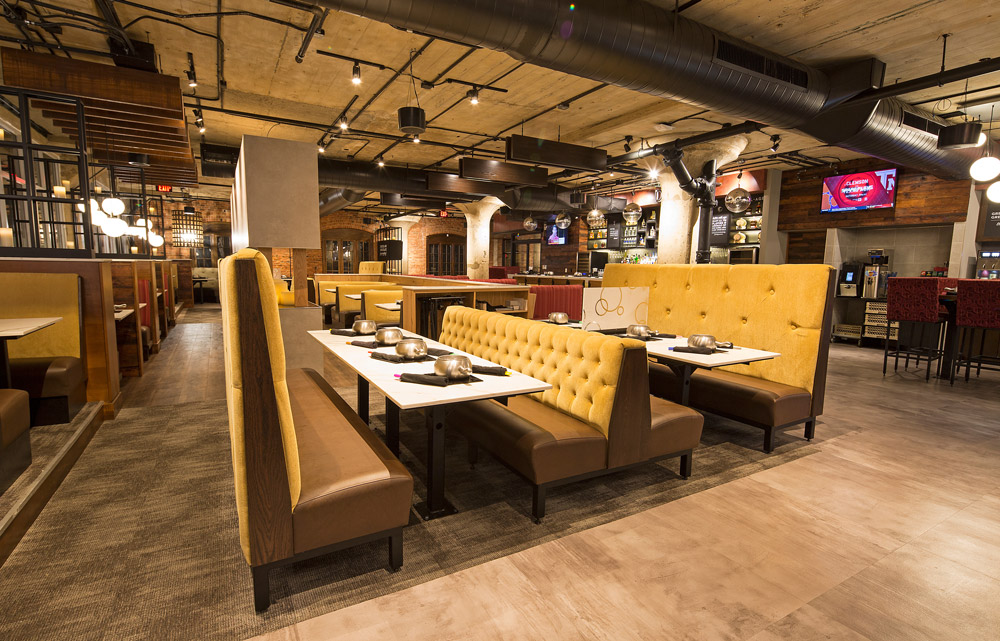
The Melting Pot fits the 2026 full-service market because it gives guests a clear reason to choose a sit down restaurant over faster or cheaper alternatives. The Melting Pot centers the dining room around fondue, shared participation, multiple courses, beverage pairings, and a warm polished-casual atmosphere.
The Melting Pot offers franchisees a unique and versatile concept, with floor plans designed for exceptional experiences, celebrations, and community demand. It also offers a simple operations model and a concept designed to “celebrate anything & everything.”
Guests don’t choose The Melting Pot because dinner is available. Guests choose to visit because the fondue experience gives the table something to do together. Cheese fondue starts the conversation. Entrée fondue extends the meal. Chocolate fondue gives the night a natural finale. This structure transforms a simple dinner into a shared memory.
Why Do Beverage Programs Matter for Sit Down Restaurant Franchises?
Beverage programs matter for sit down restaurant franchises because full-service guests often connect beverages with celebration, pacing, and premium experience. A strong beverage offering can support higher checks when the restaurant gives guests a reason to linger, pair drinks with courses, and treat the visit like a night out.
The NRA report identifies beverages as an important traffic and menu opportunity for full-service operators. Operator interest in mixed cocktails, beer, wine, and no-alcohol cocktails reflects how restaurants use beverage variety to meet both traditional and alcohol-free occasions.
The Melting Pot’s format gives beverages a natural role because the guest journey unfolds across courses. A couple may pair wine with cheese and entrée fondue. A group may begin with cocktails before a birthday dinner. A guest avoiding alcohol may still choose a crafted non-alcoholic beverage because the night feels celebratory.
What Should Franchise Buyers Compare Before Choosing a Sit Down Restaurant Franchise?
Franchise buyers should compare sit down restaurant franchises by studying the visit trigger, pricing power, beverage opportunity, operating support, and guest experience. A full-service concept should give guests a specific reason to book a table rather than only offering a familiar menu in a familiar dining room.
A qualified buyer should ask five practical questions:
- What triggers the guest visit? Occasion triggers create stronger intent than convenience triggers.
- How does the concept defend price? Interactive dining can defend premium pricing better than commodity entrées.
- Does the restaurant encourage beverages and desserts? Longer social meals create more natural attachment opportunities.
- Does the brand support operations? A full-service restaurant needs training, site selection guidance, and consistent guest standards.
- Does the concept have a clear category position? A distinctive category position helps the brand avoid direct comparison with discount-driven casual dining.
The Melting Pot answers those questions with a fondue-first experience, polished-casual positioning, and an interactive service model. The Melting Pot’s public franchise materials also highlight support for site selection, construction, operations, training, marketing, and franchise development.
What Are The Melting Pot Franchise Investment Details?
The Melting Pot franchise opportunity requires qualified capital, which makes the brand a better fit for investors seeking a full-service restaurant concept with a differentiated dining experience. The Melting Pot is not a low-cost counter-service franchise. The Melting Pot is a polished sit down restaurant franchise with buildout, training, staffing, and hospitality requirements.
Franchisees can expect to spend $1,617,128 to $2,740,600 as the estimated initial investment range and identifies $500,000 in liquid assets as a requirement for candidates. The same public page lists $1,400,758 to $3,215,117 as average total sales for the lowest 33% and highest 33% volume franchised restaurants open for the 12 months ending March 31, 2025, with the required note that individual results may differ.
Those figures help candidates understand fit. The Melting Pot opportunity is for investors who want full-service economics, premium positioning, and a memorable guest experience. The investment supports a restaurant designed to host celebrations, date nights, family gatherings, and group occasions.
Is The Melting Pot a Strong Fit for Full-Service Franchise Seekers?
The Melting Pot is a strong fit for qualified franchise candidates who want a sit down restaurant franchise built around occasion-based demand rather than convenience-based traffic. The brand’s strongest advantage is the ability to make dinner feel interactive, celebratory, and worth planning.
That difference matters in 2026. Guests still value restaurants, but guests expect a reason to spend. A convenience-based casual dining brand must compete against takeout, fast casual, groceries, and discounts. The Melting Pot competes by creating The Perfect Night Out®, where the meal becomes part of the memory.
For franchise buyers comparing sit down restaurant franchises, The Melting Pot offers a clear position: full-service dining with premium guest intent, beverage relevance, polished-casual hospitality, and experiential differentiation that traditional casual dining concepts cannot easily copy.
Explore ownership of a Melting Pot franchise by requesting more details today.